
One of the most reassuring sights on the Thames Path is a sign pointing the way ahead.
Whether you're walking a short local stretch or tackling the entire route from source to sea, the Thames Path's network of signposts and waymarkers quietly guides you along one of England's most iconic National Trails. They're so familiar that many walkers barely notice them, yet these signs are an essential part of the Thames Path experience.
The Classic Wooden Fingerposts
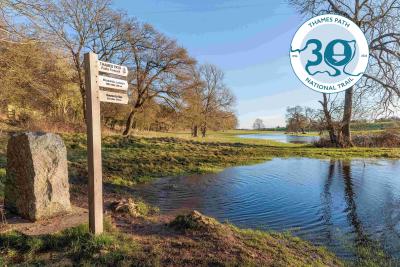
The most recognisable Thames Path signs are the traditional wooden fingerposts found throughout the countryside. Standing at gateways, road crossings and junctions, these sturdy oak posts help walkers stay on route through meadows, villages and riverside paths. Many display the familiar acorn symbol used on National Trails across England, along with the words "Thames Path." Some fingerposts also include distances and directions to nearby towns, villages or landmarks, helping walkers understand where they are within the wider journey. Over time, these signs become part of the landscape itself. Weathered by years of sunshine, rain and floods, they often feel as though they've always belonged beside the river.
Photo: The wooden fingerboards at the source of the Thames Path National Trail
Following the Acorn Trail
Not every sign is large and obvious. Some of the most important waymarkers are also the smallest. Circular acorn discs attached to gates, posts and fences help guide walkers through sections where the route might otherwise be unclear. They're particularly useful where the Thames Path leaves the river briefly, crosses farmland or passes through busy urban areas. Spotting the next acorn marker becomes second nature, especially on longer walks.
Photo: The Metal Acorn signs that line the new section of England Coast Path / Thames Path and guid you towards the sea in Kent

Signs That Make Exploration Easy
The Thames Path passes through a remarkable variety of landscapes, from open countryside to historic cities. Without clear waymarking, it would be easy to lose the route when paths split, roads intersect or riverside access changes. The signposting network helps ensure that walkers can enjoy the scenery without constantly checking a map. It also provides reassurance for those who may be walking a section of the trail for the first time.
The People Behind the Signs
Every fingerpost and waymarker represents the work of people who care deeply about the trail.
Volunteers and the trail team help install, repair and replace signs, ensuring walkers can continue to navigate safely and confidently. While a fingerpost may seem simple, it plays a vital role in connecting communities, landscapes and visitors along the river. The next time you pass one, spare a thought for the people who put it there!
A Signpost Treasure Hunt
On your next Thames Path walk, see how many different navigation signs you can find:
- Wooden fingerposts
- Acorn waymarker discs
- Directional arrows
- Public footpath signs
- National Trail signs
- Route diversion signs
You may discover that following the signs becomes an enjoyable part of the adventure itself.
In our next blog, we'll explore some of the Thames Path's most unusual and historic signs – from mile markers and lock notices to quirky signposts that tell the story of the river's past.